Self-Leadership · You Were Never Series
What You Keep Not Saying Is Costing You More Than You Think
May 19, 2026 · 8 minute read
You had the thought. You knew exactly what needed to be said. And you did not say it. You found a reason not to. The timing was off. The person was not in the right headspace. You would bring it up later when things were calmer. Later arrived as a different situation with its own reason to wait, and the thing you needed to say got filed further back. It is still there.
That pattern has a cost that rarely gets calculated until it has been running for years. By then the cumulative weight of everything left unsaid has shaped the relationship, the dynamic, and the version of yourself you bring into the room. You do not notice it accumulating. You just notice, one day, that you feel further from the people and situations around you than you thought you were.
What Happens When You Don't Speak Up in a Relationship
They do not disappear. They do not get processed or resolved by time. They become the texture of your relationships with the people you have not said them to. They become the low-grade resentment that has no clean source because nothing specific and definable ever happened. They become the exhaustion of carrying a conversation in your head for months that would have taken five minutes to have.
The unsaid things also become the version of you that other people relate to. When you consistently withhold what you actually think, people build a picture of you based on the gap. They fill in what you are not saying with their own interpretations, which are often less accurate and sometimes less favorable than what you would have said. You are not protecting yourself from being misunderstood. You are creating the conditions for it.
"The words you swallowed did not disappear. They became the distance between you and the people you did not say them to. Every unsaid thing is a small wall built in a place that was supposed to be open."
Why You Avoid Difficult Conversations
Many people searching for why they don't speak up in relationships assume they lack confidence. Often the real issue is a habit that was built for protection and never updated.
At some point, saying the real thing had a cost. Someone responded badly in a way you remembered. Someone left after you were honest. Someone made you feel like the problem was not the thing that needed to be addressed but the fact that you had raised it. You learned to hold it. You got very good at deciding in advance that the outcome was not worth the risk of the conversation.
The problem is you kept making that calculation in situations where the original risk no longer applied. You are still protecting yourself from a room you left years ago. The person in front of you now is not the person who made saying things dangerous. This is the same self-editing pattern that shows up at work, just running in a different room with higher stakes attached. Your body and your habits do not know that yet. They are still running the old protocol in the new situation.
Unspoken Resentment and Self-Respect
Every time you do not say the thing you need to say, you send yourself a message. The message is: what I think and what I need is not worth the trouble of saying. Repeat that message hundreds of times over years and it becomes a fact you live inside. Not consciously. You would never say out loud that your thoughts do not matter. But the behavior says it on your behalf, quietly, repeatedly, until it starts to feel true.
Saying things is not just communication. It is how you maintain your own sense of presence and legitimacy in your own life. The people who consistently withhold what they actually think start to lose access to it. The opinion forms more slowly. The conviction fades. What started as strategic silence becomes a genuine uncertainty about what you actually think, because you have so rarely heard yourself say it. Emotional distance rarely appears all at once. It develops through dozens of small conversations that never happen.
The conversation you have been rehearsing
There is probably one specific conversation you have been having in your head for weeks or months, running through different versions of how it goes, imagining different responses, building the case, softening the approach, deciding it is not the right time. That conversation has taken up more time and energy in your head than the actual conversation would take in reality. The version in your head will never be resolved. The actual one might be. The rehearsal is not preparation. It is avoidance wearing a productive disguise.
The Cost of Suppressed Communication in Specific Terms
In relationships, consistently not saying what you mean creates a specific kind of distance that is hard to name. Everything looks fine. Nothing feels quite real. You have a version of closeness that stops at the level where the real conversations would begin. The relationship has been built on the surface, on suppressed communication, because that is where you have been willing to show up.
Take someone who's quietly resented their partner for three years over how household responsibilities got divided, without ever naming it directly, because naming it felt like starting a fight over something that should have been obvious. Each unraised instance compounds into the next, until the resentment has nothing to do with the dishes anymore and everything to do with years of unspoken resentment that never had a chance to be addressed because it was never said out loud in the first place. This kind of people pleasing in relationships rarely looks like the obvious kind. It looks like keeping the peace, right up until the peace itself becomes the problem.
At work, withholding your actual assessment of situations means the people around you are making decisions based on incomplete information. Your silence reads as agreement, or as having nothing to contribute, or as being easy to manage. None of those readings serves you. And the cost is not just yours. The room you are in is making worse decisions because the thing you are not saying is relevant.
In your relationship with yourself, the silence creates a specific kind of disconnect. As explored in you are still becoming, who you are is not fixed, and part of what shapes you is what you allow yourself to express. The self you are becoming is partly constructed by what you say and what you do not say. Consistent silence shapes a specific kind of person, one whose internal experience and external presence are further apart than they need to be, which is its own quiet form of emotional distance from yourself.
What is the one thing you have been not saying to someone who is actually safe enough to hear it? Not the hardest conversation. The next one. The one that is almost ready.
How to Start Speaking Up for Yourself
You do not have to say everything at once. You do not have to have the conversation you have been dreading for months as the first one. You do not need anyone's permission to start. You start with the smallest thing. The thing you have been not saying to someone who is genuinely safe enough to hear it. Say that one. Not because you expect a perfect response, but because you need to practice believing your words have a right to exist in the room.
The voice does not come back all at once. It comes back one sentence at a time. One conversation that went well becomes the evidence that the next one is worth risking. The calculus shifts. The habit of silence becomes less automatic. Not quickly. But actually.
The distance in your relationships, the exhaustion of carrying unsaid things, the slow erosion of your own confidence in your perspective, all of it is downstream of the same habit. It is the same shrinking pattern wearing a quieter costume. And the habit is reversible. Not by deciding to be more open. By saying the next specific thing to the next specific person in the next available moment when it belongs.
What is the one thing you have been not saying that you already know needs to be said? You do not have to answer here. But notice that you already know what it is. That is the one to start with.
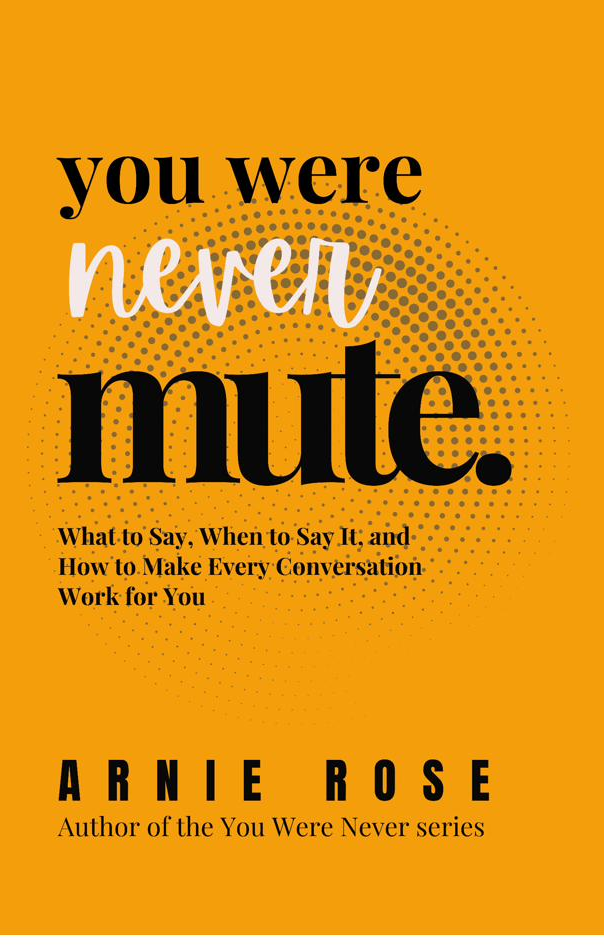
You Were Never Mute is about the conversations you rehearsed and never had, the things you knew but could not make yourself say, and how to get the words back.
Read You Were Never Mute on Amazon
Common Questions
What happens when you don't speak up in a relationship?
The unsaid things don't disappear. They accumulate into a specific kind of distance and unspoken resentment that has no clear source, because nothing definite ever actually happened to point to.
Why do I avoid difficult conversations even when I know I need to have them?
Usually because speaking up once carried a real cost, and the brain generalized that single experience into a permanent rule, even in relationships where the original risk no longer applies.
Is suppressed communication a form of people pleasing?
Often, yes. Withholding what you actually think to keep a relationship comfortable is a form of people pleasing, even when it doesn't look like the more obvious kinds, since it prioritizes someone else's comfort over your own honesty.
How do I start speaking up after years of staying quiet?
Start with the smallest unsaid thing, said to someone who is genuinely safe to hear it. One conversation that goes well becomes evidence the next one is worth the risk, and the habit of silence loosens gradually rather than all at once.
Beyond the Pages
Join the weekly newsletter. Early access on original writing: The Blind Spot Series, Ode to Home: Letters of the Living, and Beyond the Page.