Self-Leadership · You Were Never Series
The One Habit That Is Quietly Costing You Everything
May 16, 2026 · 8 minute read
The habits that cost the most are never the obvious ones. You already know about those. The one that is costing you everything is the one that looks reasonable from the outside. The one you can explain away. The one other people would probably call smart.
It is the habit of making yourself smaller to keep the peace. Of adjusting your words before they leave your mouth. Of shrinking your actual opinion down to the version that will land better in the room you are in. It does not look like self-erasure. It looks like social intelligence. That is exactly why it keeps working against you.
What Self-Editing Actually Looks Like in Practice
You have a thought in a meeting. Before you say it, you run a quick calculation. Who is in the room. What their reaction is likely to be. Whether you have enough standing today to say this particular thing. Whether the idea is worth the risk of being wrong in front of these people. By the time you finish calculating, someone else has said it, or the conversation has moved, or you have talked yourself into believing it was not that important anyway.
That is the habit. Not one incident. The pattern of it. The automatic self-editing that has become so fast you barely notice it happening. You think you are being strategic. You are actually shrinking. The difference matters because one is a skill and one is a slow erosion of your own presence in rooms that matter to you.
It shows up in writing too. You draft the message, then soften it. You add qualifiers. You remove the directness and replace it with something more palatable. By the time you send it, the actual point has been so diluted that it barely resembles what you originally needed to say. And you wonder why people keep misunderstanding you.
"Every time you edit yourself before speaking, you send yourself a message. The message is: my real thoughts are not safe to say here. Say that enough times and you start to believe it everywhere."
Why Self-Censoring Feels Like Intelligence, Not Fear
Reading a room before you speak is a real skill. Knowing your audience matters. Choosing the right moment for a hard conversation is a legitimate judgment. None of that is the problem.
The problem is when the calculation runs automatically in every room, for every thought, regardless of the actual stakes. When you are editing yourself in conversations with people who are safe, in rooms where there is no real risk, for opinions that are not actually dangerous to share. That is not strategy. That is a fear response that has been running on autopilot for so long it has started to feel like wisdom. Many people mistake this communication anxiety for a personality trait when it is actually a learned response to past experiences.
The giveaway is exhaustion. Real strategic communication is energizing. You are thinking clearly, choosing well, making good decisions about what to say and when. What the shrinking habit produces is a different kind of tired. The kind that comes from spending energy managing what you present rather than engaging with what is actually happening.
Why You Edit Yourself Before Speaking
You did not choose this habit consciously. It was a response to something real and specific. A time you spoke up and it went badly. A person who made it very clear your opinion was not welcome. A relationship where the cost of honesty was too high to keep paying indefinitely. You learned to edit yourself before speaking because editing yourself before speaking kept you safer in that situation. That is not a character flaw. It was a reasonable response to a real set of circumstances. The problem is that you are still running it in situations where it no longer applies.
Take someone who once raised a concern in a team meeting early in their career and watched it get dismissed in a way that embarrassed them in front of people whose opinion mattered at the time. That single afternoon can quietly install years of self silencing in every meeting after it, regardless of who's actually in the room or whether the same risk exists anymore. The fear of speaking up didn't come from nowhere. It came from one specific data point that got generalized into a permanent rule.
The problem is you kept the habit long after the situation that created it changed. You are still editing for rooms you no longer live in, for people who are no longer watching, for stakes that no longer exist. The original calculation made sense. The continued application of it does not.
As described in not everyone blooms in the same season, the conditions that shaped you are not the same conditions you are operating in now. The timing of how and when you open up is yours to decide. The habit was built in one season. You are in a different one.
The real cost nobody calculates
When you consistently shrink yourself, people stop expecting the real version from you. They build a relationship with the edited one. And there is a ceiling on how close you can get to someone when they are only ever seeing the managed version. You reach a point of closeness and cannot go past it, and you do not fully understand why. It is because the person on the other side is not fully there. The habit does not just cost you in meetings. It costs you in friendships, in partnerships, in every relationship where being known actually matters.
How to Stop Self-Censoring in Everyday Conversations
You do not fix this by forcing yourself to say everything you think in every situation. That is not the goal. The goal is to notice the moment the calculation begins and ask one honest question: am I editing this for clarity or for safety?
Editing for clarity makes you a better communicator. You are taking a complex thought and making it accessible. That is a skill worth keeping. Editing for safety makes you smaller. You are taking a complete thought and removing the parts that might make someone uncomfortable, not because those parts are wrong but because you are afraid of what it will cost you to say them.
- 01Notice the next time you change what you are about to say right before you say it. Just notice it. You do not have to change the behavior yet. Awareness comes first.
- 02Ask whether the edit is improving the communication or reducing the exposure. Those are two different things.
- 03Choose one low-stakes situation this week to say the unedited version. A conversation with someone safe. A message where you leave the direct sentence in instead of softening it.
- 04Notice what actually happens. The catastrophe you were calculating for rarely arrives. And when it does not, you have one piece of evidence that the habit has been overstating the risk.
- 05Repeat. The habit was built through repetition. It comes undone the same way, one instance at a time, each one adding to the evidence that you can say the real thing and survive it.
Think about the last thing you changed before you said it. What were you protecting yourself from? And is that thing you were protecting yourself from actually still a threat in the room you are in now?
What Happens When You Stop Self-Censoring
The first thing that changes is the exhaustion. When you stop running the constant management calculation, you have more energy for the actual conversation. You are present instead of managed. People feel that, even when they cannot name it.
The second thing that changes is how other people relate to you. When you stop presenting the edited version and start saying what you actually think, the people who only showed up for the edited version tend to fall away. That can feel like loss. It is also information. The people who stay after you stop performing are the ones who were actually there for you, not for the version of you that required the least from them.
The third thing that changes is your relationship with yourself. Every time you say the real thing and nothing collapses, you build a slightly different understanding of what is safe. You stop waiting for someone else to clear the statement first. Over time that understanding shifts the baseline. The habit loses its grip not because you decided to stop it but because the evidence that it was overstating the risk has become too strong to ignore.
What is the one thing you have been consistently editing out of your conversations that you already know needs to be said? Who would you have to say it to first?
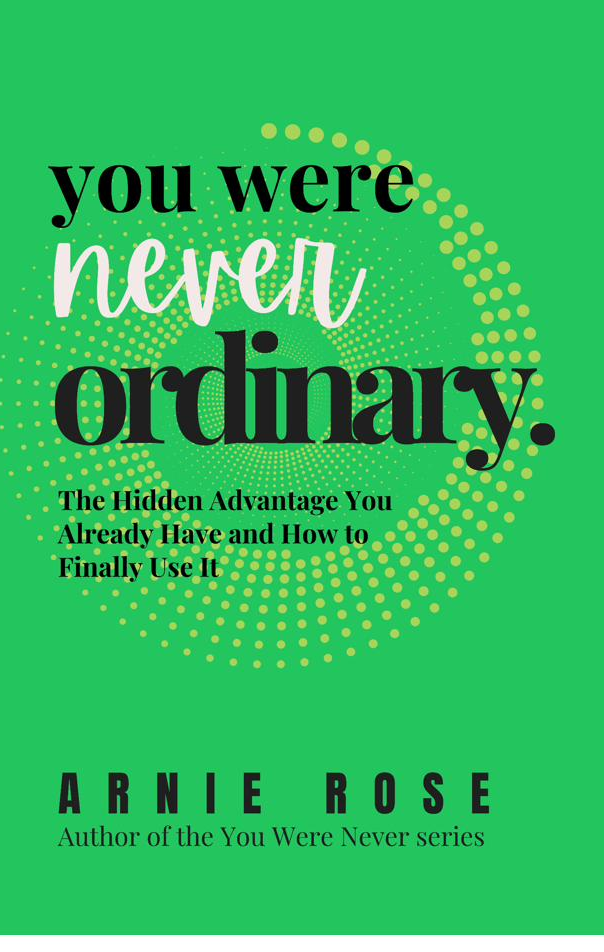
You Were Never Ordinary is about the years spent adjusting yourself to fit spaces that were never actually built for you, and what happens when you stop performing the version of yourself that fits everywhere and start showing up as the one that is actually yours.
Read You Were Never Ordinary on Amazon
Common Questions
Why do I always edit myself before speaking?
Usually because speaking up went badly at some point in the past, and the brain built a protective habit of pre-screening thoughts before they leave your mouth. The habit often outlasts the specific situation that created it.
Is self-editing the same as being thoughtful?
Not always. Choosing the right moment for a conversation is real judgment. Automatically softening every thought in every room, regardless of actual risk, is closer to a fear response that has started to feel like wisdom.
How do I know if I'm self-censoring out of fear or being strategic?
Strategic communication tends to feel energizing, since you're thinking clearly and choosing well. Fear-based self-editing produces a different kind of exhaustion, the kind that comes from managing your presentation rather than engaging with what's actually happening.
How do I stop constantly editing myself before I speak?
Start by noticing the moment the edit happens, without trying to change it yet. Then choose one low-stakes situation to say the unedited version, and notice that the consequence you were calculating for rarely arrives.
Beyond the Pages
Join the weekly newsletter. Early access on original writing: The Blind Spot Series, Ode to Home: Letters of the Living, and Beyond the Page.