You Were Never Series
12 Books About Identity Everyone Should Read
June 25, 2026 · 10 minute read
Identity books are different from most self-help. A self-help book usually wants to change what you do. An identity book wants to change how you understand who you've been the whole time, which is a slower, deeper, and often more uncomfortable starting point.
These twelve cover a wide range: temperament, trauma, self-compassion, the stories families hand down without meaning to. None of them overlap with the books featured in our earlier collection of books that change how you see yourself. A few will resonate immediately. Others might sit unread for a while before they're needed. That's fine. Identity books tend to arrive at the right time more than the right order.
1. Quiet, by Susan Cain
On introversion as identity, not flaw
Cain's central argument is that modern culture built an "extrovert ideal" and quietly taught introverts that something was wrong with them for not fitting it. The book traces how character-based culture shifted to personality-based culture, and what got lost for roughly a third of the population along the way. For anyone who has spent years trying to perform extroversion they don't actually have, this book functions less like advice and more like permission.
2. Untamed, by Glennon Doyle
On identity built from obligation
Doyle's memoir centers on a moment she calls "There She Is," the instant she recognized a version of herself that had been buried under decades of trying to be good, dutiful, and acceptable to everyone else. The book is unapologetically personal, built from her own divorce, faith crisis, and remarriage, but the underlying question, how much of your identity is actually yours versus inherited expectation, applies far beyond her specific story.
3. The Subtle Art of Not Giving a F*ck, by Mark Manson
On choosing what defines you
Underneath the provocative title is a fairly serious argument: you only have a limited amount of attention and concern to spend, and most people spend it on things that were never actually worth defining themselves by. Manson's case is that a stable identity comes from choosing your values deliberately, not from caring about more things or fewer things, but from caring about the right things on purpose.
4. Self-Compassion, by Kristin Neff
On treating yourself like someone worth being kind to
Neff's research compares self-esteem, which depends on comparing favorably to others, with self-compassion, which doesn't require winning any comparison at all. Her argument is that an identity built on self-compassion is more stable than one built on self-esteem, because it doesn't collapse the moment you're no longer above average at something. This connects directly to why comparison feels so personal in the first place: if your sense of self depends on the comparison going your way, every comparison becomes a small threat rather than neutral information.
5. The Body Keeps the Score, by Bessel van der Kolk
On identity shaped by what the body remembers
Van der Kolk's research reframes a lot of what gets called personality or temperament as the body's accumulated response to past experience, particularly trauma. The book is dense and clinical in places, but its core idea, that identity isn't purely a story told in the mind, it's also something carried physically, has influenced an enormous amount of later writing on how early experience shapes self-image long after the original events are forgotten.
6. Braving the Wilderness, by Brené Brown
On belonging without performing
Brown's argument here is sharper than in her earlier books: true belonging requires the willingness to stand alone, even unpopular, rather than constantly editing yourself to fit whatever group is in front of you. She distinguishes this from "fitting in," which she frames as assessing a situation and changing who you are to be accepted, a pattern that erodes identity slowly, one small accommodation at a time.
7. The Four Agreements, by Don Miguel Ruiz
On identity shaped by old agreements you never consciously made
Ruiz frames much of identity as a set of agreements absorbed in childhood, rules about who you're supposed to be that were never actually negotiated, just installed, the kind of inherited rule that takes years to even notice, let alone question. His four agreements, including "don't take anything personally" and "don't make assumptions," function as a short, practical framework for noticing which parts of your identity were chosen and which were simply inherited.
8. Maybe You Should Talk to Someone, by Lori Gottlieb
On identity seen from both sides of therapy
Gottlieb is a therapist who, after a difficult breakup, ends up in therapy herself, and the book weaves her own sessions with stories from her clients. What makes it useful here is how plainly it shows identity being actively constructed and re-examined in real time, not as an abstract concept but as something genuinely being worked on, messily, by real people including the author herself.
9. The Power of Now, by Eckhart Tolle
On the difference between you and your thoughts about you
Tolle's central distinction is between the self you experience directly and the constant narrating voice in your head that's constructing a story about that self. His argument, stripped of its more mystical framing, is a useful one: a lot of identity distress comes from believing every thought the mind generates about who you are, rather than noticing there's a difference between having a thought and being that thought. This is close to the idea that a result and a verdict about your worth are two separate things, even when the mind insists on treating them as one.
10. You Are a Badass, by Jen Sincero
On the gap between who you act like and who you actually are
Sincero's book is blunter and more irreverent than most of the others on this list, but its underlying claim fits the theme: a lot of people are walking around performing a smaller, more apologetic version of themselves than the one they actually are underneath, and the gap between the two costs more than people realize. It's a louder book than van der Kolk or Cain, but the question underneath, who would you be without the smallness, is the same one.
11. Bittersweet, by Susan Cain
On identity built from longing rather than positivity
Cain's follow-up to Quiet looks at a different trait entirely: the tendency toward melancholy, longing, and bittersweet feeling that some people carry as a core part of who they are, often while being told to "look on the bright side" their whole lives. The book makes a case that this disposition isn't a flaw to fix, but a real and valid way of experiencing the world, one that shows up across art, music, and the people who make both.
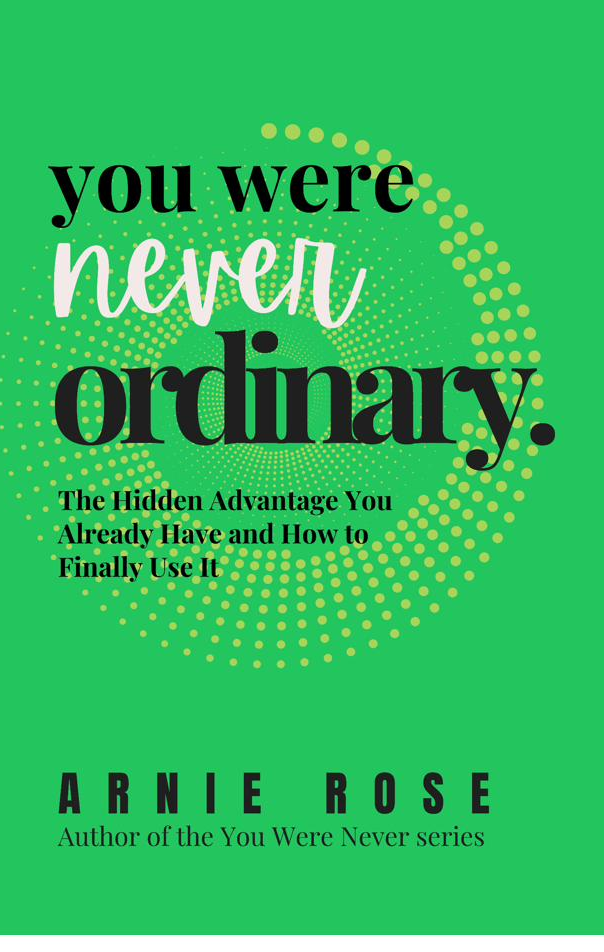
12. You Were Never Ordinary, by Arnie Rose
On the identity built from fitting in
This list closes with the second book in this series for a specific reason. Most of the books above examine identity from the inside, temperament, trauma, belief, story. This one looks specifically at the identity built from shrinking to be accepted, the version of yourself shaped entirely around what got you approval rather than what was actually true. After eleven books about identity in general, this is the one that asks the more specific question: which parts of your identity did you build, and which parts were simply the path of least resistance?
Beyond the Pages
Join the weekly newsletter. Early access on original writing: The Blind Spot Series, Ode to Home: Letters of the Living, and Beyond the Page.