You Were Never Series
10 Books That Will Change How You See Yourself
June 4, 2026 · 10 minute read
Most books like this repeat the same five titles in a different order. This list does too, in a few places, because some books earned their reputation. But it also includes a few you won't find on every list, picked because they actually change something specific about how you see yourself, not just how motivated you feel for a week.
A book belongs on this list if it does one of two things: it gives you a new way to picture yourself, or it gives you language for something you already felt but never had a name for. Books that just repeat "you can do it" don't make the cut. These ten go further than that.
You don't need to read all ten in order, and you don't need to read all ten at all. A few of these cover similar ground from different angles, so if one resonates strongly, it's fine to sit with it before moving to the next. The list is organized loosely from action-focused books at the start to identity-focused books toward the end, ending with the one that asks the most basic question underneath all the others: what timeline are you actually measuring yourself against, and was it ever really yours?
What books change how you see yourself? The books that create the biggest shifts are usually the ones that challenge your identity, self-image, and assumptions about success, rather than ones that just teach productivity or motivation.
What These Books Actually Change
Before getting into the list, it helps to know what kind of change each book is actually aiming at, since "see yourself differently" can mean several different things:
- How you see failure. Several books here reframe failure as information instead of evidence about your worth.
- How you see your own identity. A few argue that identity is built from repeated actions, not fixed from birth.
- How you see confidence. Some separate confidence from self-worth entirely, which changes what you're actually chasing.
- How you see comparison. A couple directly address measuring yourself against other people's timelines.
- How you see your own self-image. The oldest book on this list is also the most direct about how your internal picture quietly sets the ceiling on everything else.
1. Atomic Habits, by James Clear
On identity and small actions
This is the book most people start with, and for good reason. Clear's core idea is that habits aren't separate from identity, they build it. Every time you do something, you're casting a small vote for the kind of person you believe you are. The book reframes self-image as something built from repeated small actions rather than a single decision to "be different." The same idea shows up in why consistency outperforms motivation almost every time. If you've ever felt behind because the big change never seemed to stick, this explains why, and what to do instead.
2. Mindset, by Carol Dweck
On fixed vs. growth thinking
Dweck's research splits people into two rough categories: those who believe their abilities are fixed, and those who believe abilities can be developed. The book itself is more nuanced than the soundbite version that's spread online, and it's worth reading in full rather than relying on the summary. One detail that gets lost in the shorthand: Dweck found that praising someone's intelligence directly, rather than their effort or strategy, can actually make them more fragile, not more confident, because it teaches them to protect the label instead of taking risks that might threaten it. The actual shift the book offers is subtle: failure stops being evidence about who you are and becomes information about what you haven't learned yet, which is also why progress so often goes unnoticed in the moment it's actually happening.
3. Psycho-Cybernetics, by Maxwell Maltz
On self-image as a thermostat
Written in 1960 by a plastic surgeon who noticed that changing someone's face didn't always change how they saw themselves, this book is the original source for an idea you've probably absorbed secondhand: your self-image acts like a thermostat, quietly correcting your behavior back to whatever you privately believe you deserve. Maltz had operated on patients who looked visibly transformed afterward and still described themselves using the exact same self-criticism as before the surgery, which is what sent him looking for an explanation outside of plastic surgery entirely. It explains why willpower alone rarely produces lasting change, and why updating the internal picture matters more than forcing new behavior on top of an old one. The same idea shows up under different names across a lot of newer identity-focused writing, including work specifically about the labels people carry without ever choosing them.
4. The Gifts of Imperfection, by Brené Brown
On shame and self-acceptance
Brown's research on shame and vulnerability gave a lot of people their first real language for why trying to be perfect feels so exhausting. This book is shorter and more direct than her later work, and it's specifically about letting go of who you think you're supposed to be in favor of who you actually are. It pairs well with anything on this list that focuses more on action, since this one focuses on the feeling underneath the action.
5. The Mountain Is You, by Brianna Wiest
On self-sabotage
Wiest's central argument is that self-sabotage isn't laziness or weakness. It's usually a way of protecting yourself from a change your nervous system reads as a threat, even when your conscious mind wants it. The book reframes the obstacle as part of the actual path, not a detour from it, an idea that shows up again in why some journeys take longer than the people on them expect. It's also close to the heart of what makes people feel invisible even while putting in real effort, since the obstacle and the avoidance can look identical from the outside.
6. Feeling Good, by David Burns
On cognitive distortions
This is the most clinical book on the list, and that's exactly its value. Burns lays out the specific thinking patterns, like all-or-nothing thinking and personalization, that quietly distort how people see themselves, then gives concrete tools for catching and correcting them. If you've ever felt like your own mind was arguing against you, this book names the specific arguments and shows you how to interpret things differently the moment you notice them happening.
7. Daring Greatly, by Brené Brown
On vulnerability and worth
Brown's other major book belongs here for a different reason than The Gifts of Imperfection. This one is about the specific fear of being truly seen, and how most people build elaborate armor against it without realizing the armor is also what's keeping them disconnected. The shift it offers is less about self-esteem and more about courage. Letting yourself be known is framed as strength, not exposure. Brown's research found that the people who reported the strongest sense of belonging were not the people who had it easiest. They were the people willing to be fully seen, including the parts they were tempted to hide.
8. Man's Search for Meaning, by Viktor Frankl
On identity under extreme pressure
Frankl wrote this after surviving concentration camps during the Holocaust, and it remains one of the most direct accounts of how people hold onto a sense of self when almost everything external has been stripped away. The book argues that meaning isn't something you find, it's something you choose to assign, even in circumstances you didn't choose. He observed that prisoners who survived longest weren't always the physically strongest. Often they were the ones who held onto some specific reason to keep going, a person waiting for them, a task left unfinished, an idea worth outlasting the camp. It's a heavier read than the rest of this list, and it earns its place because of how far it pushes the question of identity past comfort and into the territory that actually tests it.
9. The Let Them Theory, by Mel Robbins
On releasing other people's opinions
Robbins built this book around a simple two-word phrase: let them. Let them think what they think, judge what they judge, live how they live. The reframe is about where you spend your energy, specifically, how much of your self-image is currently being built around managing other people's reactions to you instead of your own actual values. It's a quick read, but the phrase tends to stick with people long after they've finished the book, especially for anyone who has spent years quietly waiting for someone else's approval before making their own decisions.
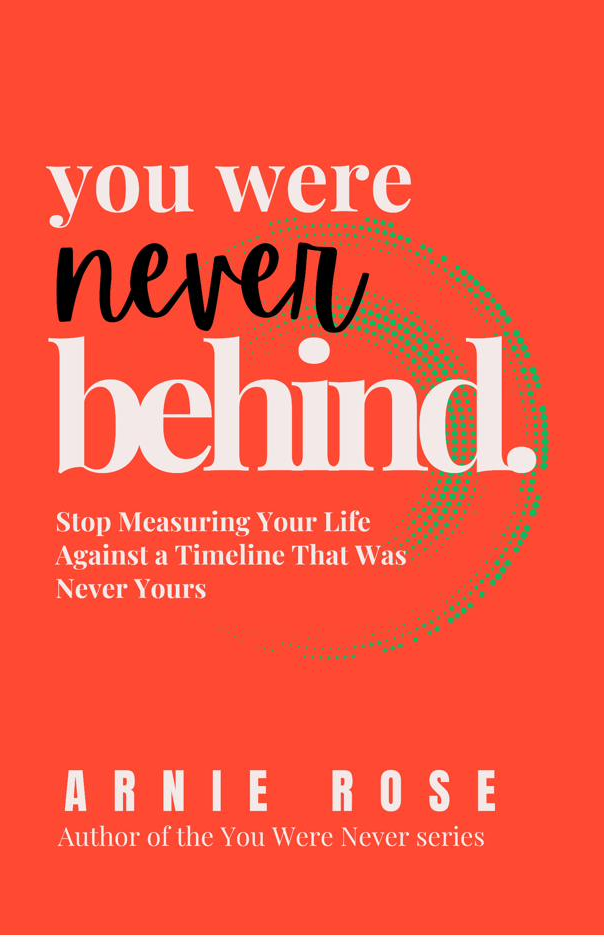
10. You Were Never Behind, by Arnie Rose
On timelines that were never yours
Why it belongs here: nine of the books above focus on what you do or how you think. None of them directly address the timeline you're measuring all of that against in the first place, which is the actual gap this book fills.
This is where the list gets personal, since it's the first book in this series. Most of the books above focus on action or mindset. This one focuses on something earlier: the timeline you've been quietly measuring yourself against, usually one you never actually chose. It picks up where books about habits and mindset leave off, by questioning the schedule those habits were supposed to be running on in the first place. If you've read any of the other nine and still feel like you're somehow behind despite doing everything "right," this is likely why.
Where Should You Start?
Ten books is a lot to choose from at once. If you're not sure where to begin, start with whatever you're actually struggling with right now, not whatever sounds most impressive to read.
- If you struggle with habits that don't stick: start with Atomic Habits.
- If you struggle with confidence: start with Psycho-Cybernetics.
- If you struggle with comparing yourself to others: start with You Were Never Behind.
- If you struggle with self-sabotage: start with The Mountain Is You.
- If you struggle with shame or feeling like you're not enough: start with The Gifts of Imperfection.
Common Questions
What books actually change how you see yourself?
Books that focus on identity and self-image rather than quick fixes tend to have the most lasting effect, including Atomic Habits, Mindset, Psycho-Cybernetics, and The Mountain Is You. The shift happens when a book changes how you talk to yourself, not just what you do.
What is the best book for changing your self-image?
Psycho-Cybernetics by Maxwell Maltz is one of the earliest and most direct books on self-image specifically. It explains how your internal picture of yourself, not your actual ability, sets the ceiling on what you do.
Are self-help books actually effective?
They can be, but the effect depends on whether the reader applies the ideas rather than just reads them. Books that offer a specific reframe, something you can actually picture differently afterward, tend to stick more than books that only offer encouragement.
What books help with identity and self-worth?
The Gifts of Imperfection and Daring Greatly, both by Brené Brown, focus specifically on self-worth and shame. For identity more broadly, Atomic Habits and Mindset both address how your sense of self forms from repeated actions and beliefs rather than fixed traits.
Beyond the Pages
Join the weekly newsletter. Early access on original writing: The Blind Spot Series, Ode to Home: Letters of the Living, and Beyond the Page.