
Growth does not always feel like growth. Sometimes it feels like exhaustion. Sometimes it feels like confusion, or like you have been in the same place for so long you cannot tell if anything is moving. Sometimes it feels like nothing at all.
The problem is that the most significant growth is often the kind that does not announce itself. It happens in the background, in the way you respond to things, in what no longer gets to you the way it used to, in the conversations you stop starting and the ones you finally do. By the time you notice it, you have been growing for a while already.
Why growth feels like stagnation while it is happening
The picture you were handed of what progress looks like: a promotion, a measurable number, a visible change in circumstance. Something you can point to. Something that shows. When it does not look like that, when the only thing that has changed is something internal and quiet, it does not register as progress. It gets dismissed, or worse, mistaken for stagnation.
What actually changes how you live is almost never the visible kind while it is in progress. It is the slow restructuring of how you respond, what you tolerate, what you reach for when things go wrong. None of that produces an announcement or a milestone. All of it compounds quietly into a different person over time.
As described in growth is not always visible, the most foundational kind of change happens well before anything on the outside catches up to it. What is already happening inside you right now may not produce anything visible for months, possibly longer. That does not mean it is not happening. It means you are in the part of the process that does not show yet.
"You do not notice growth while it is happening because you are inside it. You notice it in retrospect, when you compare who you are now to who you were in the situation you would have handled differently before."
The 7 signs
1. Things that used to drain you do not drain you the same way. You did not decide to stop reacting. You just notice one day that the reaction is smaller, or arrives later, or does not arrive at all in situations where it reliably would have before. That is not indifference. That is your nervous system settling around something it has finally processed. You have grown past it.
2. You catch yourself mid-pattern instead of after it. You used to realize what you had done hours later, or the next day, or during a conversation with someone else about something unrelated. Now you see it while it is happening. That gap closing is real change. You cannot interrupt what you cannot see, and seeing it in real time means something has shifted in how aware you are of yourself in motion.
3. You need less external validation to take action. The need is still there. You have not transcended it. But it is not blocking you the way it used to. You moved before you got the confirmation. You published before you felt ready. You said the thing without waiting for someone to tell you it was okay to say it. That is different from where you were, even if it does not feel dramatic.
4. You are clearer about what you do not want. Knowing what you do not want is not the same as being negative or closed off. It is the other half of knowing who you are. The boundaries getting clearer is part of stopping the shrinking, the things you stop agreeing to, the situations you decline before they fully unfold, those are signs of a more defined self. The edges getting sharper is evidence the shape is becoming more real.
5. Old relationships feel different without anything dramatic happening. You did not argue with anyone. Nothing changed on the surface. But something shifted in what you are willing to keep tolerating, and the relationship is slowly adjusting around that shift. This has nothing to do with comparing yourself to anyone else. Growth does this without announcing itself. The distance that appears in some relationships and the deepening that appears in others is often growth working on your social world without asking your permission.
6. You are less afraid of the conversation you have been avoiding. Not unafraid. Less afraid. You stopped waiting for permission to have it. That movement, however small, is not nothing. The fear shrinking at all means something in you has gotten stronger or clearer or more willing. You do not have to have the conversation yet for the change to be real. The fact that you could imagine having it when you could not before is a sign.
7. You are kinder to yourself on the hard days. Not because you read something that told you to be, not because you decided to practice a new approach, but because something underneath shifted. The voice that used to be merciless has gotten quieter. You still notice the failure. You just do not stay in it the same way you used to. That is not a small thing. That is one of the harder things to build.
The sign most people dismiss
Sign 7 is the one that gets explained away most easily of all. You tell yourself you are just tired, or that you were being realistic, not kind. You discount it because it does not feel like an achievement. But the shift in how you talk to yourself after a hard day is one of the most accurate indicators of internal growth there is. It is harder to build than any external result. It takes longer. It is not dramatic when it arrives. And it is real.
Signs Most People Mistake for Failure (But Are Actually Growth)
The clearest evidence of growth sometimes looks like something going wrong, simply because it does not match what you expected growth to feel like. Three things in particular tend to get misread.
Outgrowing a friendship. A relationship that used to feel effortless starts to feel like work, with nothing dramatic having happened between you. This often gets read as something broken, when it's frequently just two people changing at different rates. Outgrowing a connection is not the same as failing one.
Feeling more uncertain than you used to. Confidence that felt solid a year ago starts to feel less stable. This is usually a sign your understanding has gotten more complete, not less, because genuine depth tends to reveal complexity that surface-level certainty never had to account for.
Questioning beliefs you used to defend without thinking. Reconsidering something you once would have argued for automatically feels like instability from the inside. It's more often evidence that you're actually examining your own thinking instead of running it on autopilot.
Becoming less reactive in situations that used to set you off. This sometimes gets mistaken for not caring anymore, especially by people used to your old reaction. It's rarely indifference. It's usually regulation, which looks like apathy to anyone measuring you against your old intensity.
What to Do With This Information
You do not need to celebrate it or turn it into a story you perform. You just need to stop denying that it is happening. The self-assessment that says nothing is moving is often running on outdated information. You are looking at who you were a year ago and comparing it to who you are today and not accounting for the distance because the distance was traveled gradually and is invisible in retrospect.
becoming takes longer than people admit, the internal work that is happening right now will not become visible on the outside for a while yet. That is not a sign that it is not real. It is just the timeline of this kind of change.
Think about a situation from two years ago that you handled badly or would have handled differently now. You handled it differently because something changed. What changed?
Growth does not need your acknowledgment to continue
You do not have to recognize it for it to keep happening. But recognizing it changes your relationship to the process. When you know growth is happening even when it does not feel like it, you stop abandoning the work when it stops feeling productive. You stop quitting at the point right before something shifts because you have learned that the feeling of stagnation and the reality of stagnation are not the same thing.
Keep going. Not because it will feel like progress soon, though it might. Because you already have more evidence than you have been giving yourself credit for.
Which of these seven signs do you recognize in yourself right now? And what would change about how you talk to yourself today if you took that recognition seriously?
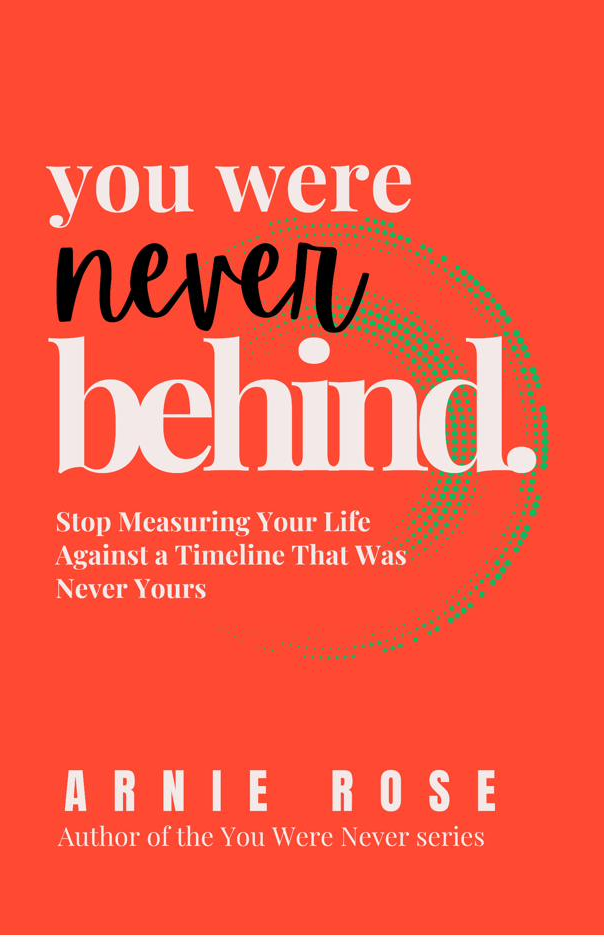
You Were Never Behind is about the kind of progress that does not show up in a highlight reel. The quiet, structural kind that changes how you live before anyone notices, including you.
Read You Were Never Behind on Amazon